
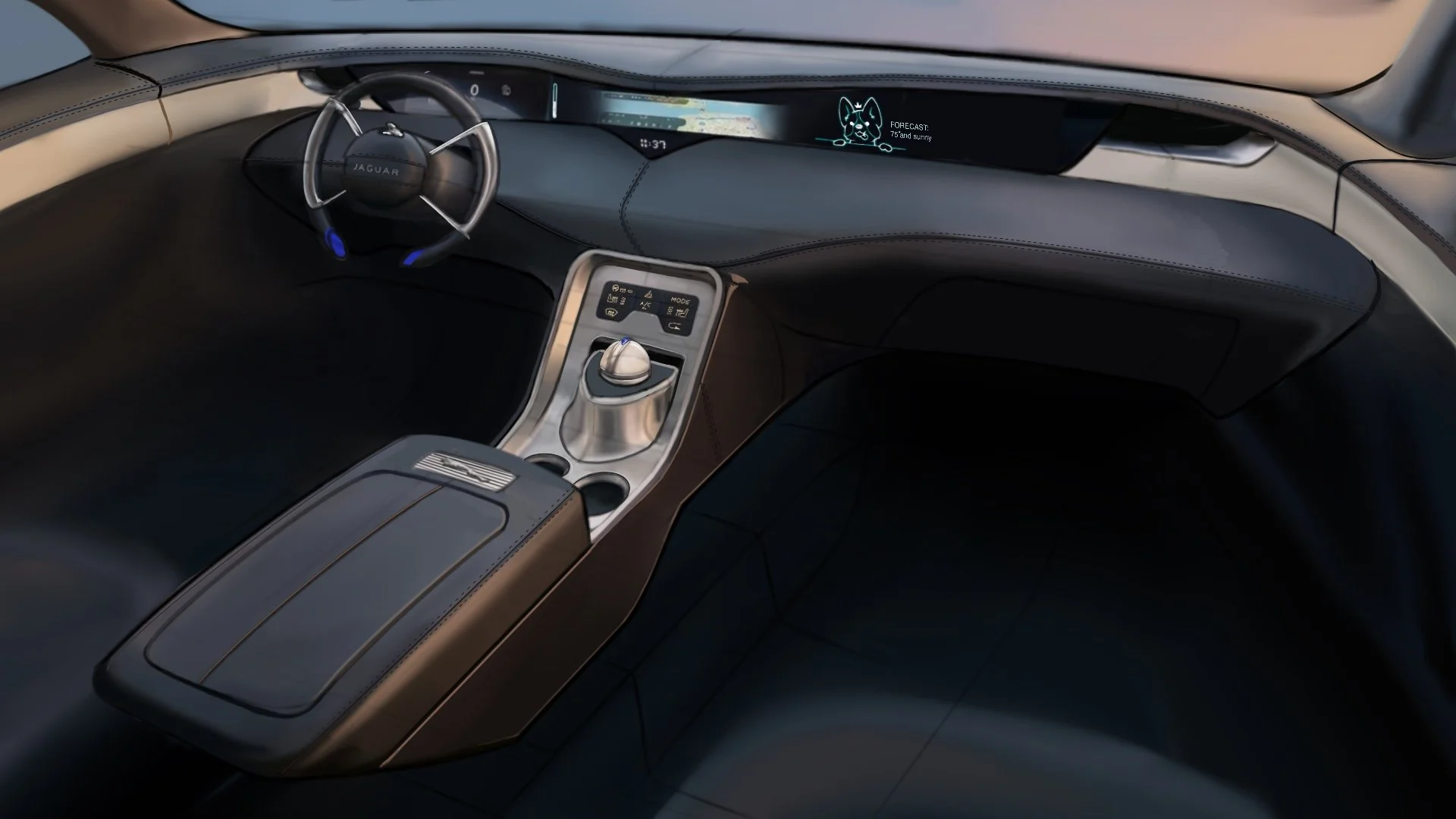
project goal:
This project explores how Jaguar can redefine the future of British luxury by embracing craftsmanship, tactile interaction, and the analog renaissance to create a more personal and emotionally connected interior experience.
spring studio 2026
duration: 6 weeks
What is the next evolution of Jaguar luxury interior?
BRAND RESEARCH
Jaguar: Where They’ve Been, Where They Are, and Where They’re Going.
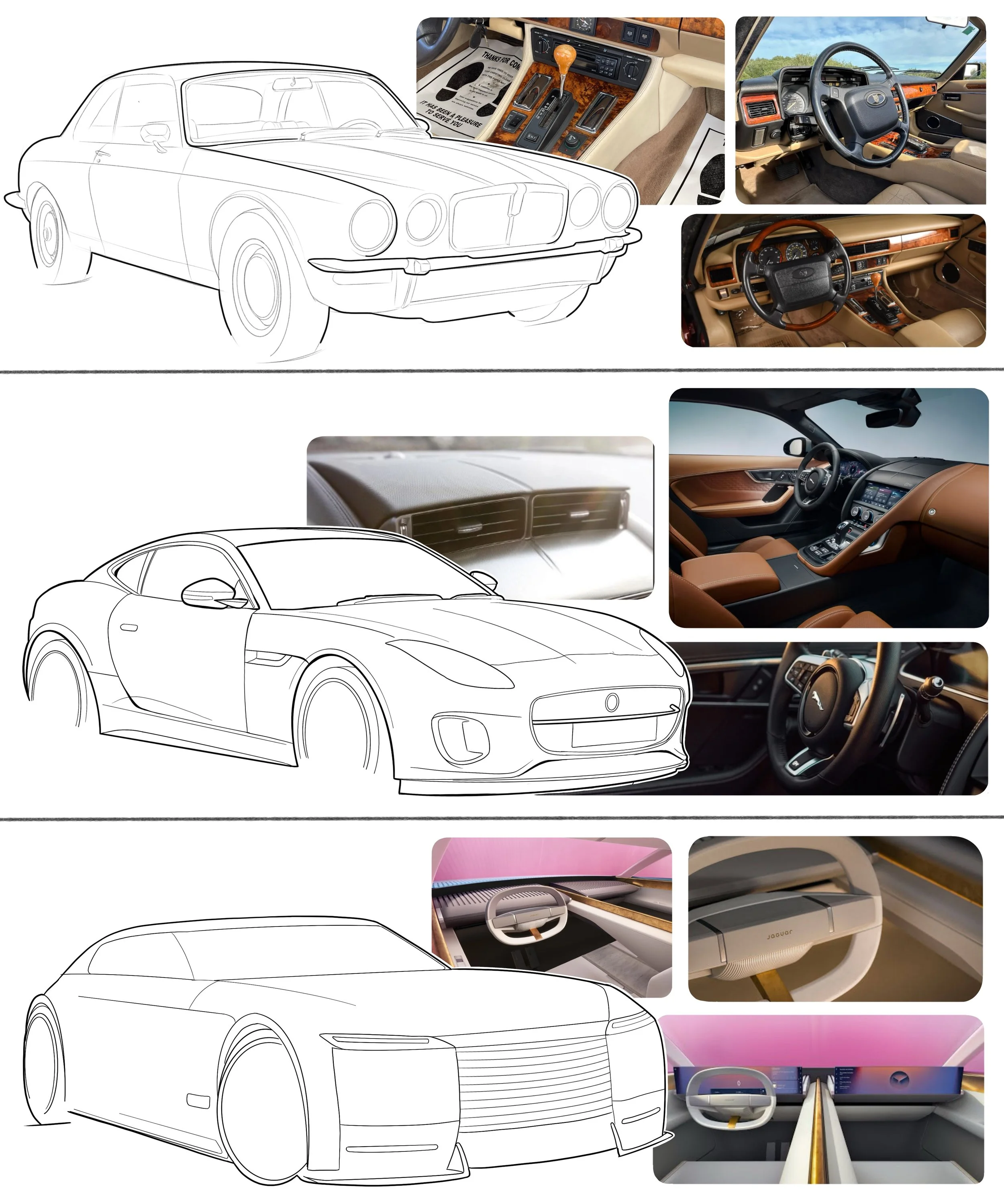
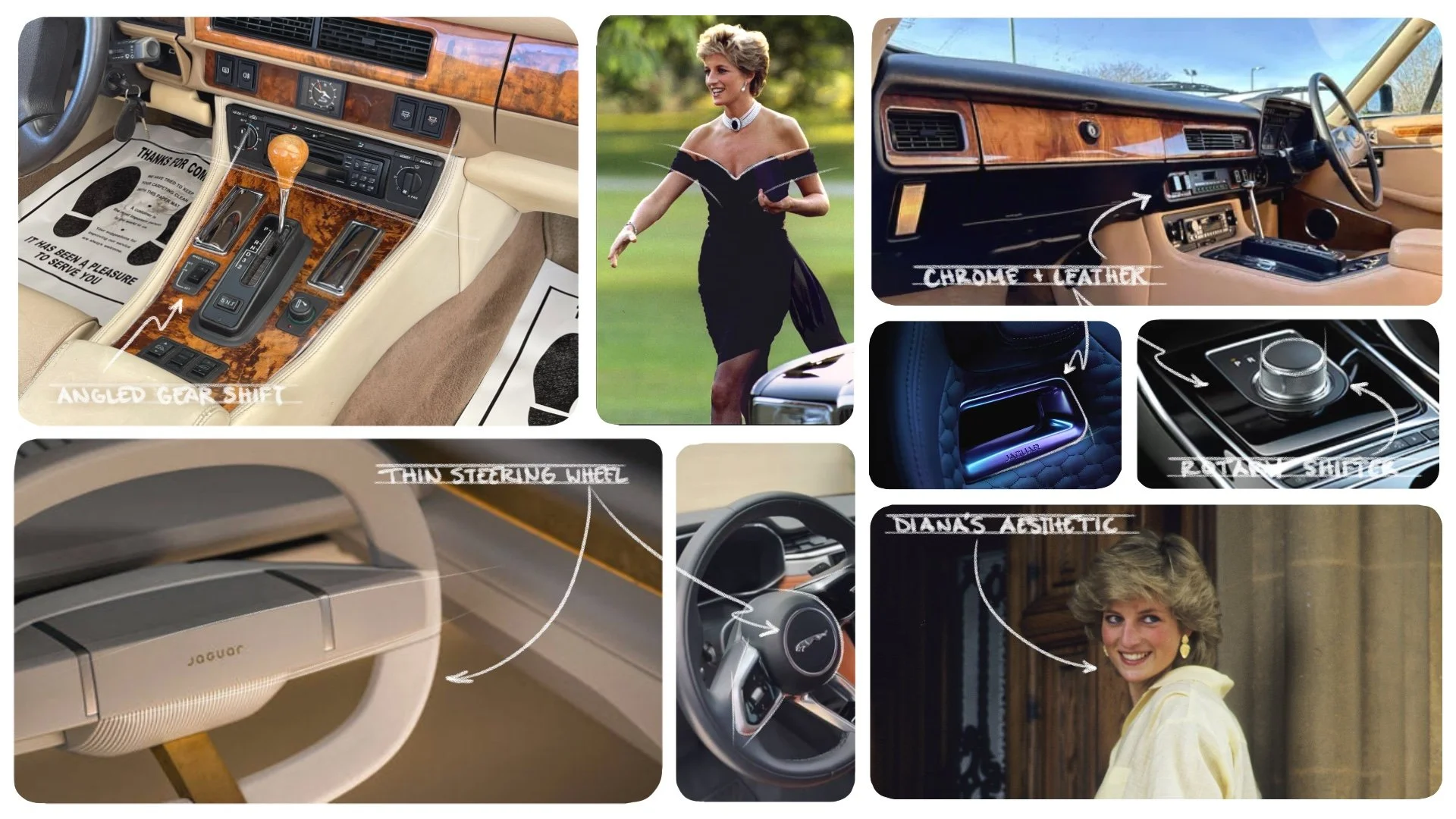
Jaguar XJC 1975
Luxury came from craftsmanship, not technology.
Walnut wood
Chrome + Leather
Thin steering wheel
Jaguar F-Type 2013
Everything wraps around the driver.
Wraparound cockpit
Rising air vents
Hidden technology
Jaguar 00 Concept 2024
Technology supports the experience rather than dominating it.
Hidden storage,
Travertine stone + Brass
Woven textiles
Insights
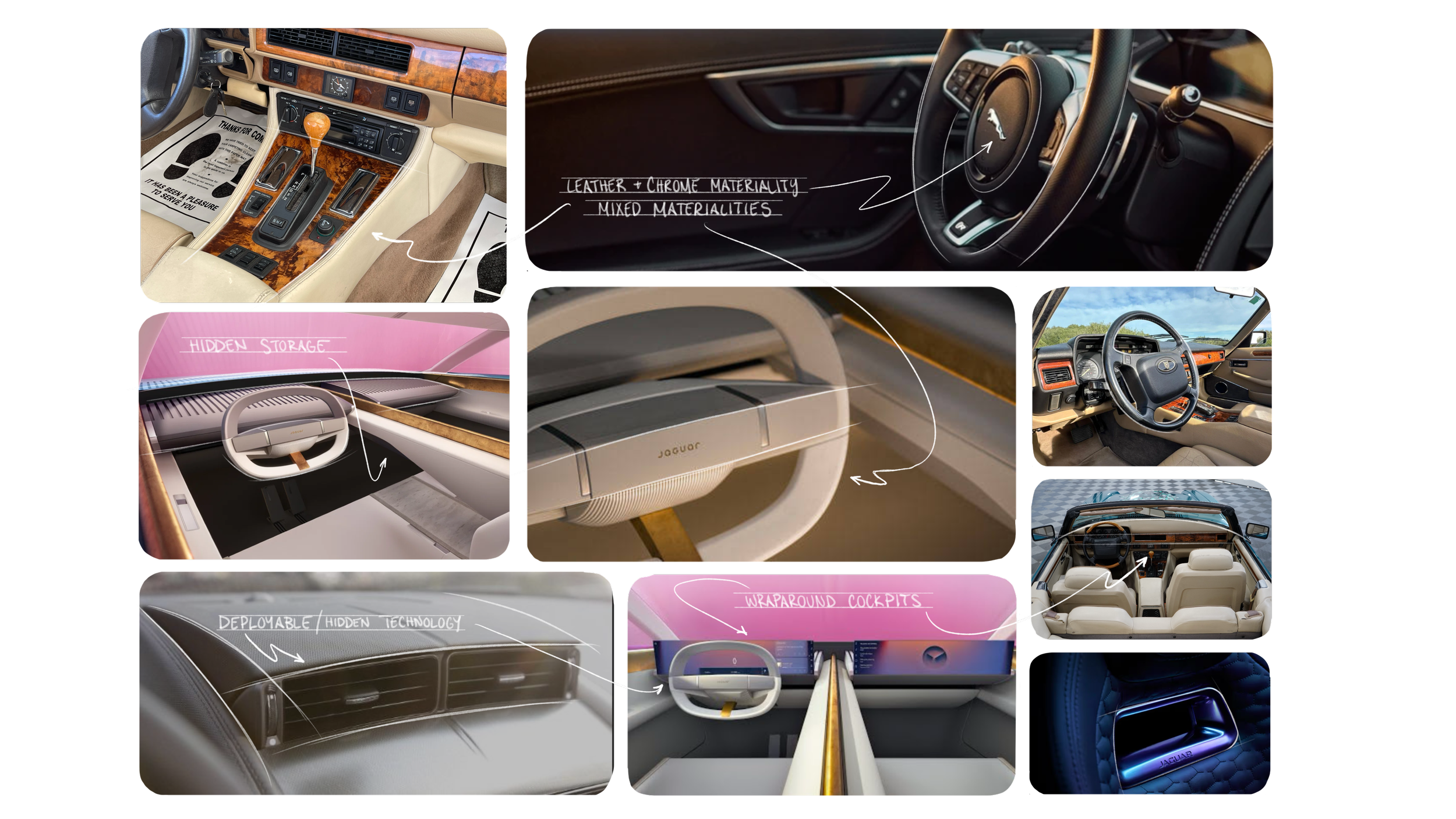
Though Jaguar’s aesthetic direction has changed throughout history, they have maintained consistency throughout their designs. Those consistencies include:
deployable/hidden features
wood materials
user-centered
chrome metal finishes
leather finishes
wrap around cockpits
clean transitions
strong curvature
TREND RESEARCH
Analog Renaissance.
Younger generations are searching for those products that bring resistance to the digital life.
The resurgence of analog mediums like books, vinyls, photography, CDs, and prints, reflects a shift toward authenticity and emotional connection.
Analog renaissance highlights a desire for products that encourage presence, celebrate craftsmanship, and create lasting personal value.

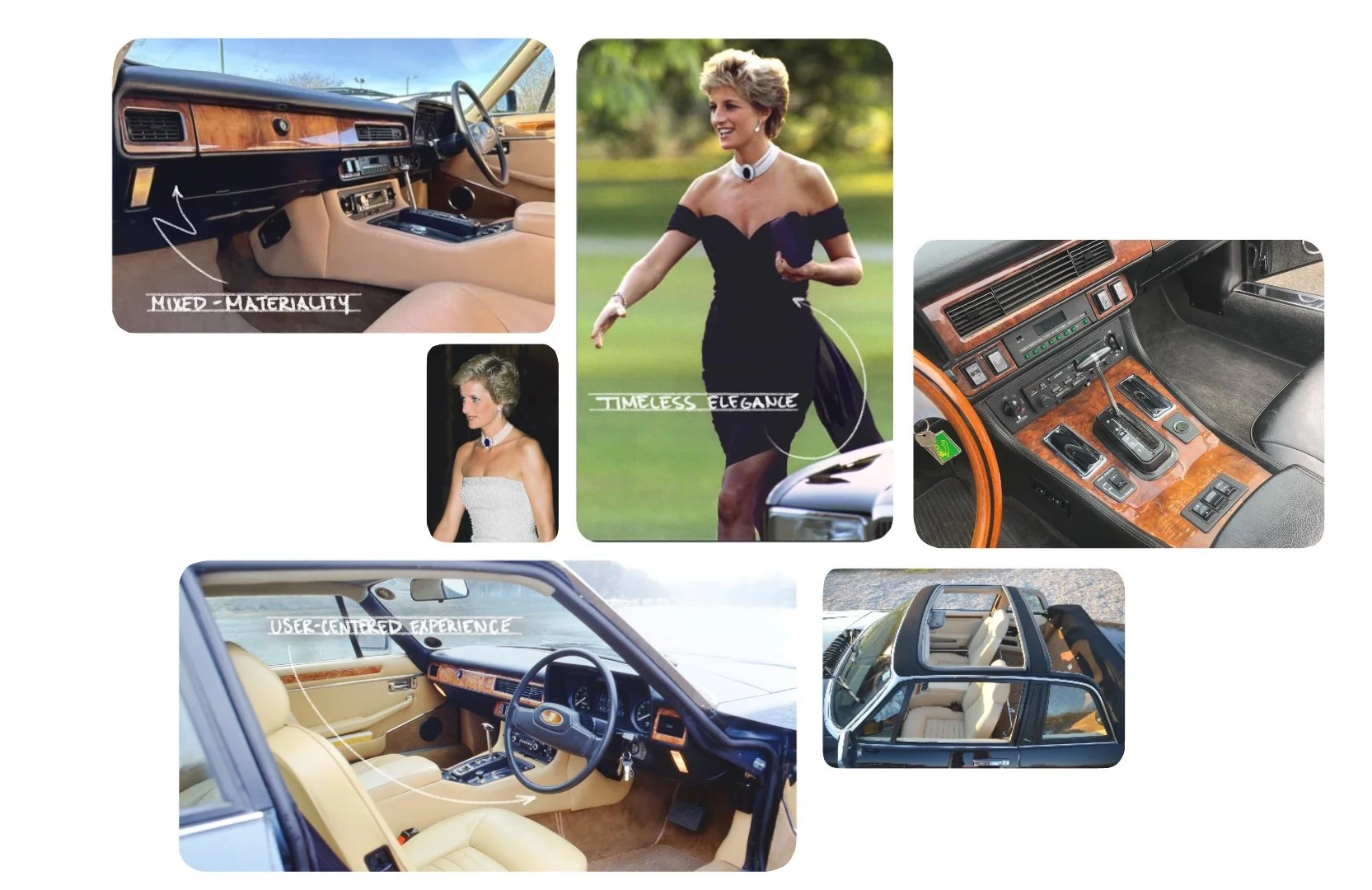
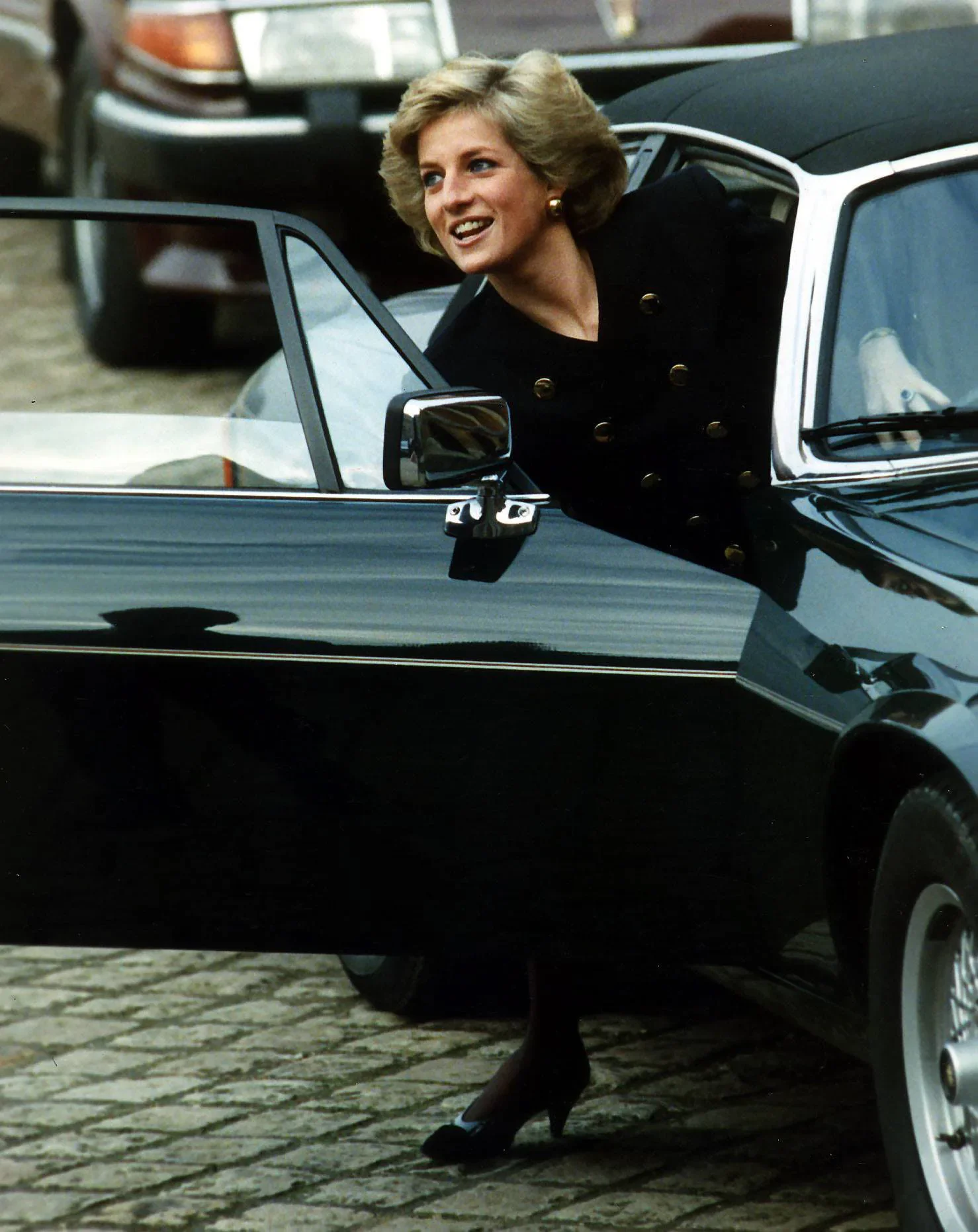
Jaguar’s Ambassador of the Analog: Princess Diana
Princess Diana became one of Jaguar's most recognizable owners when she chose a Jaguar XJS that reflected her preference for thoughtful, user-centered design rather than conventional luxury.
In an era increasingly defined by digital experiences, Diana represents the values driving today's analog renaissance: genuine human connection, timeless design, and an appreciation for objects and experiences that feel personal, tactile, and enduring.
Design Goals
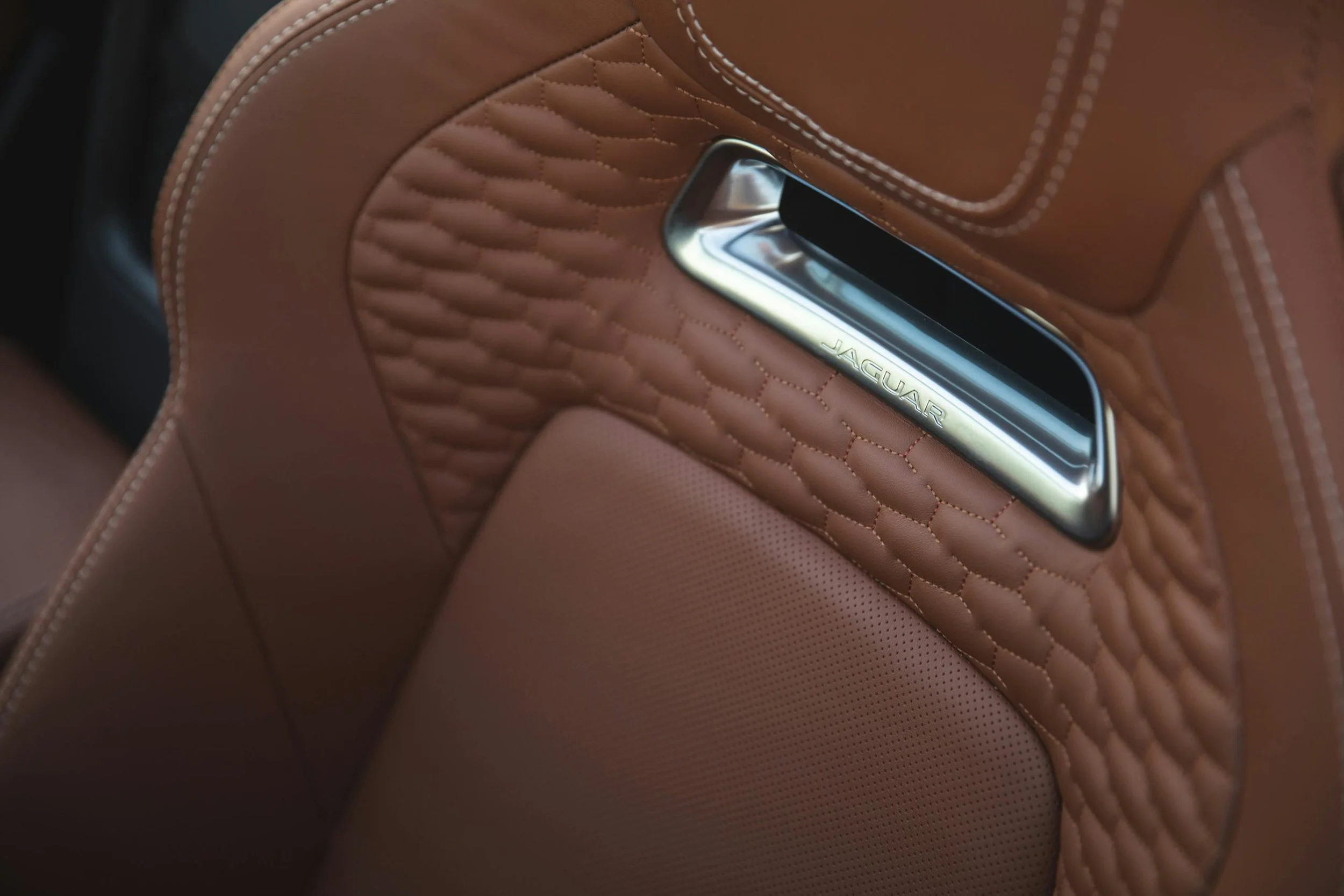
Mixed Materiality
Combining natural and technical materials reinforces Jaguar's identity by expressing both timeless craftsmanship and forward-thinking design.
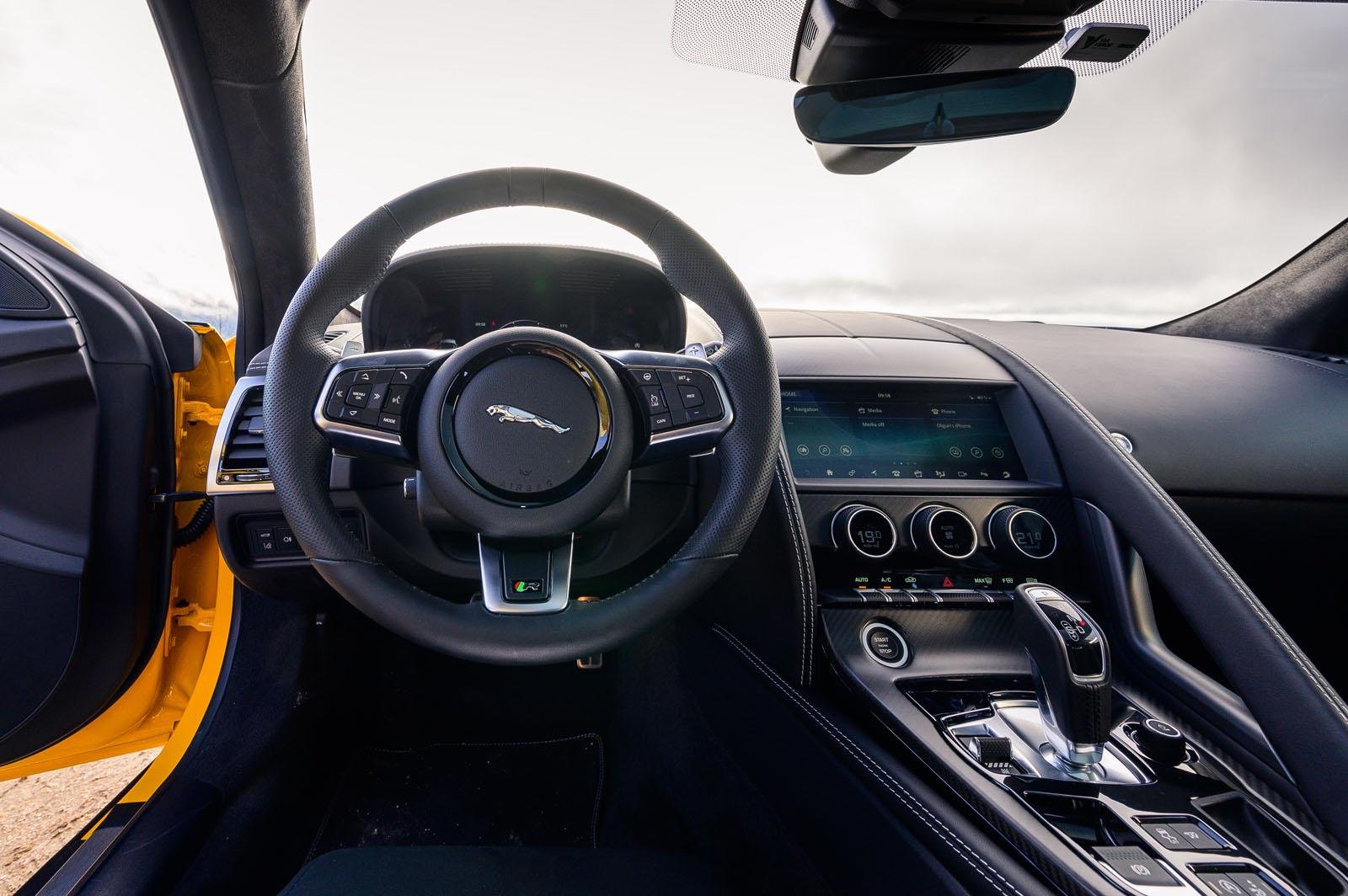
User-centered Experience
Prioritizing the user's needs results in an experience that is intuitive, emotionally engaging, and effortless to navigate.
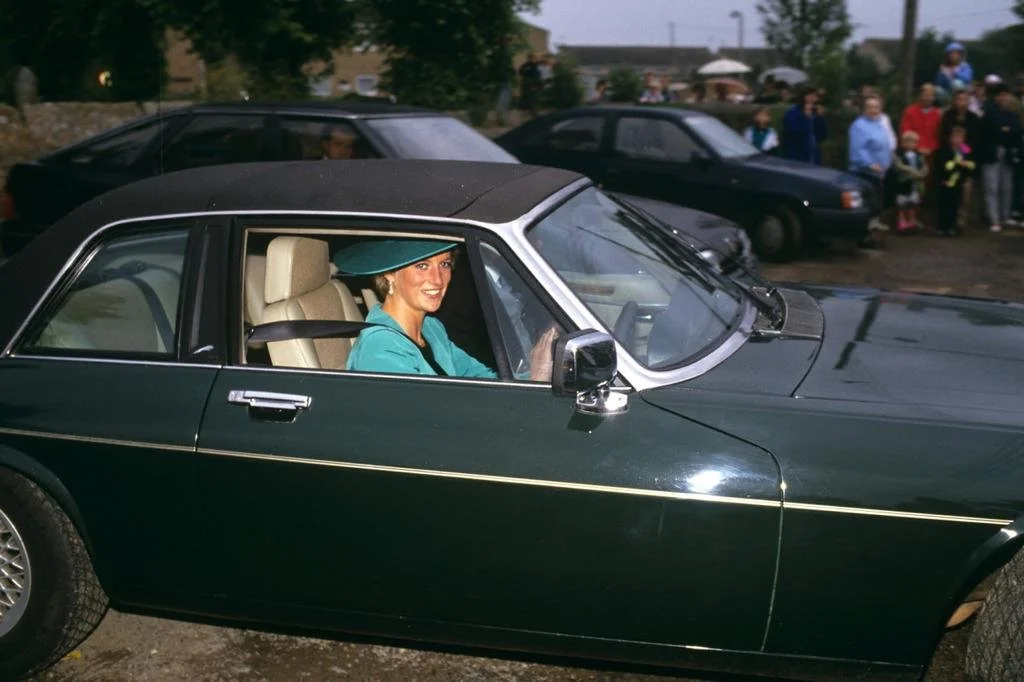
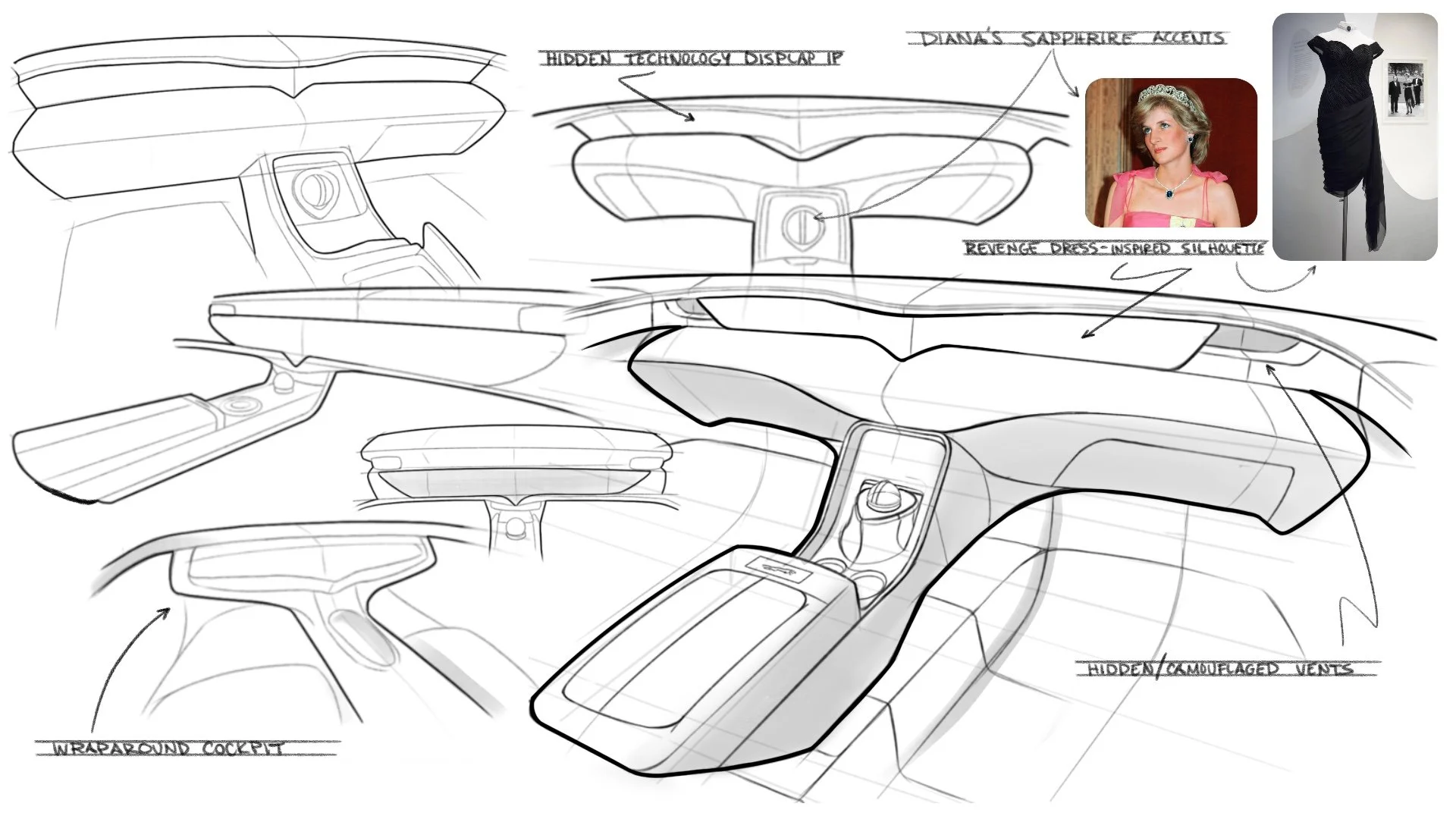
Diana’s Aesthetic
Princess Diana serves as a symbol of Jaguar's analog renaissance, representing timeless elegance, authenticity, and lasting emotional connection.
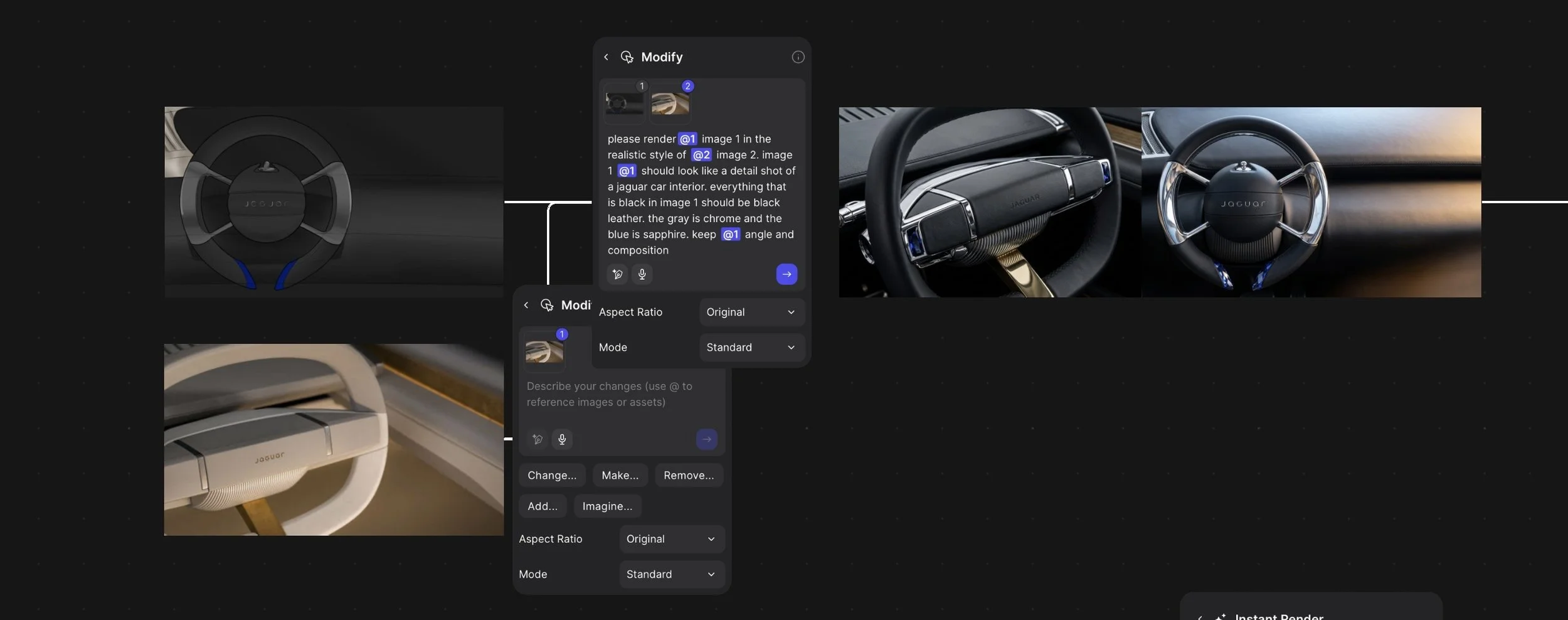
The Process.
To create photo realistic renders of the Jaguar interior, I placed a sketch with flat colors into Vizcom and prompted it to render my sketch in the style of a Jaguar interior, and using the output as a reference for lighting.
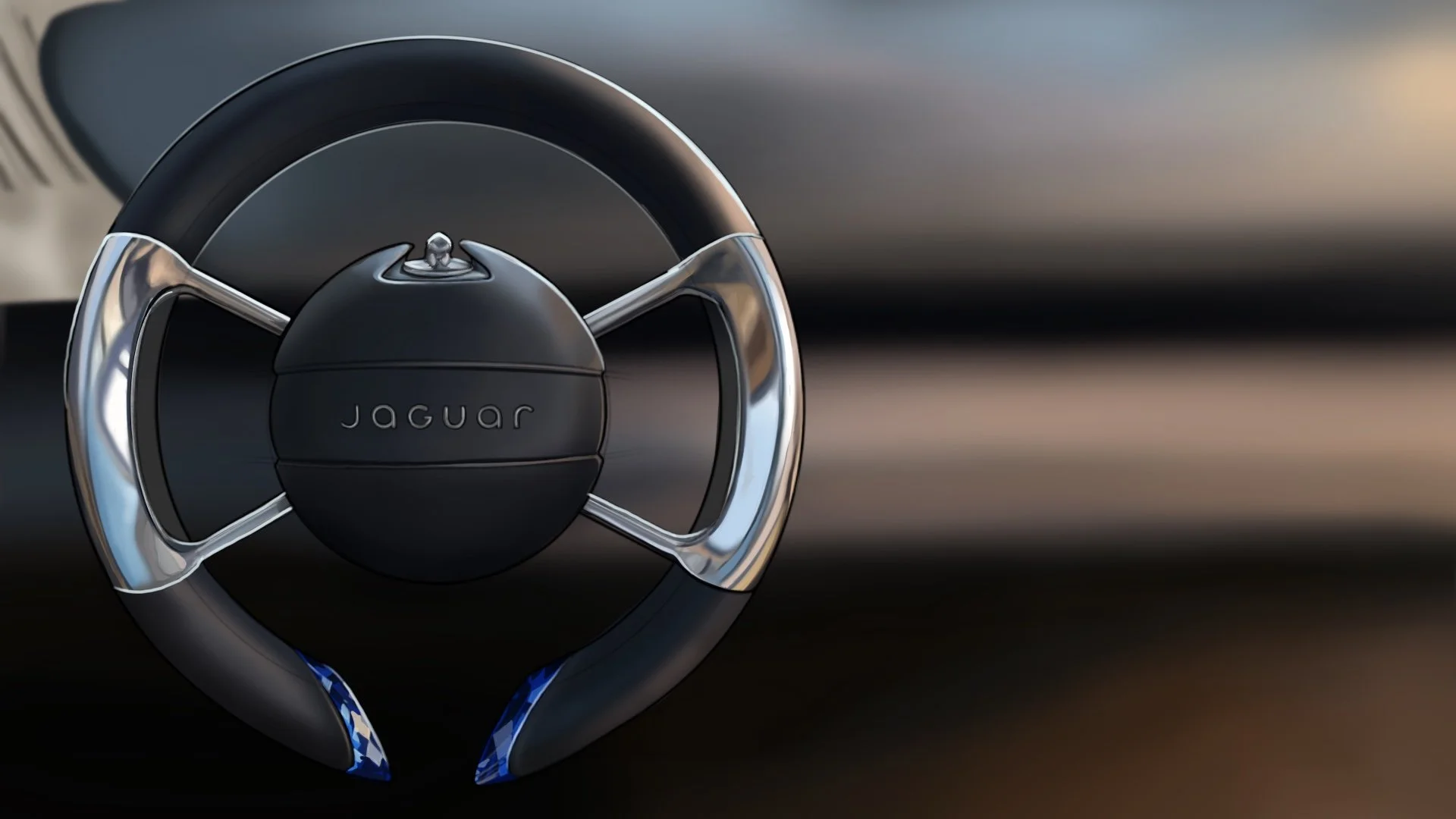
Mixed Materiality.
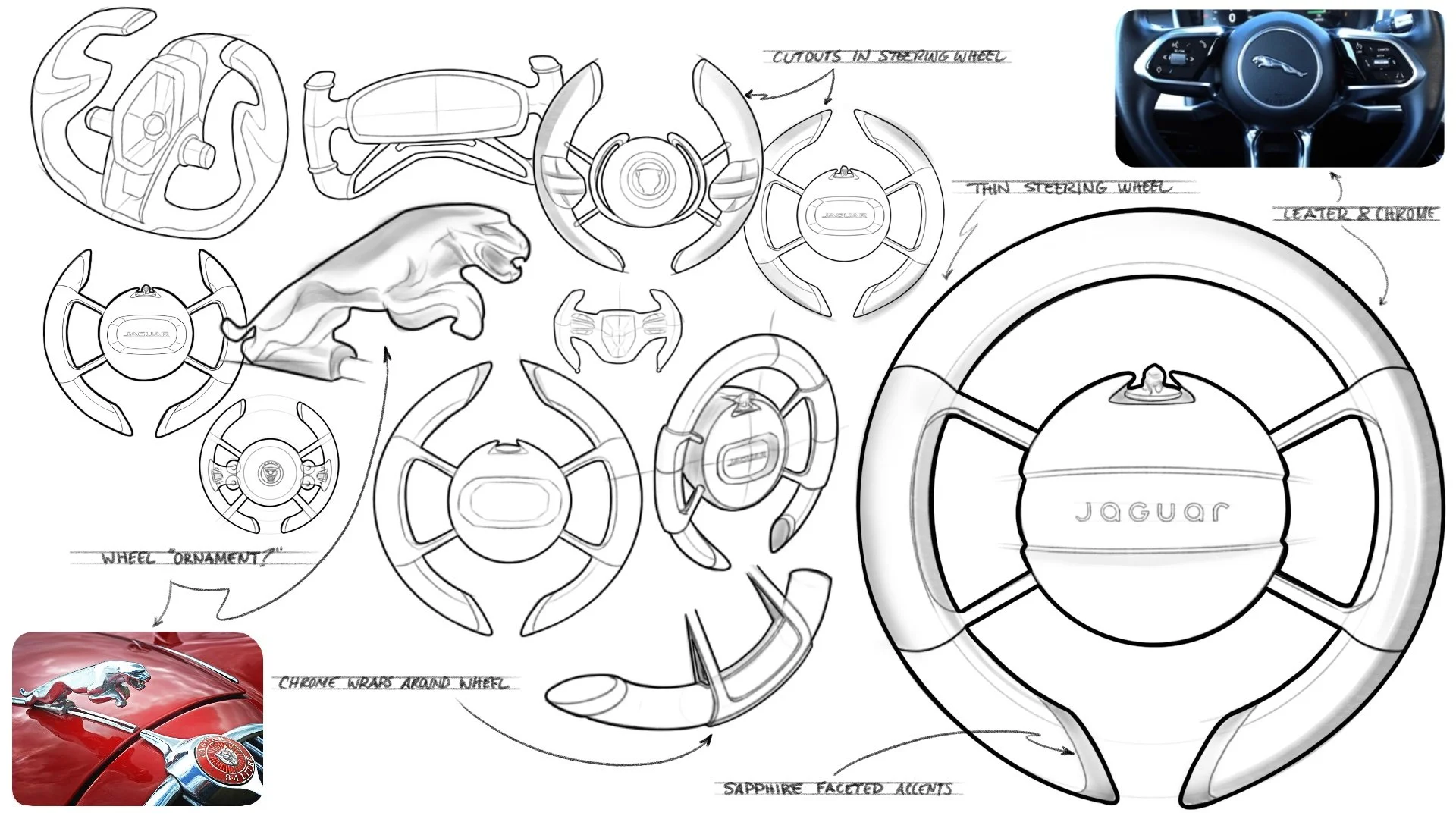
Exploring Jaguar’s mixed-material language through a balance of chrome wraparound handles, sapphire facet accents, and hand-stitched leather.
The integrated “wheel ornament” acts as a jewelry-like focal point, bringing a sense of personalization to the wheel .
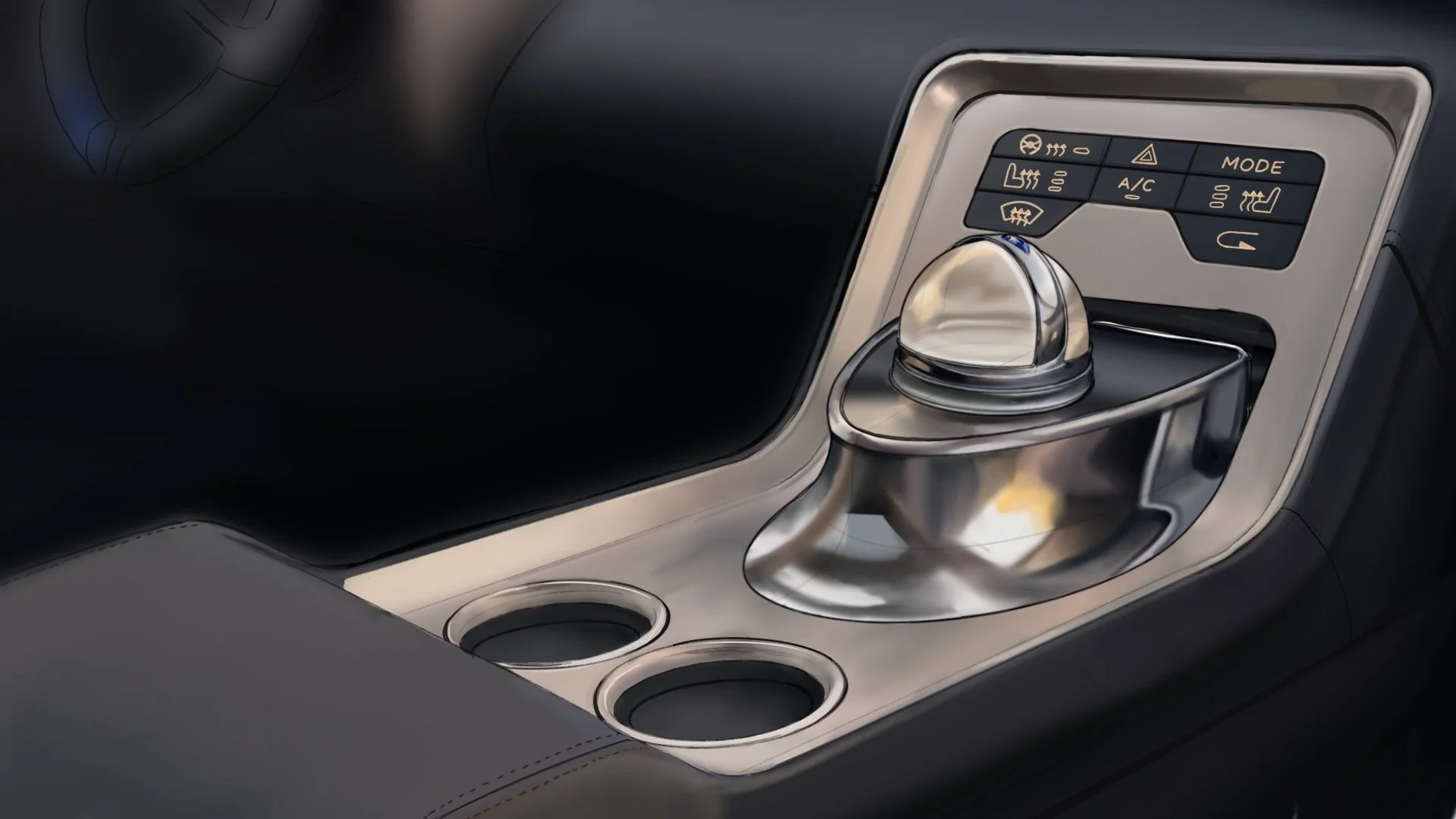
Sculpted Surfaces.
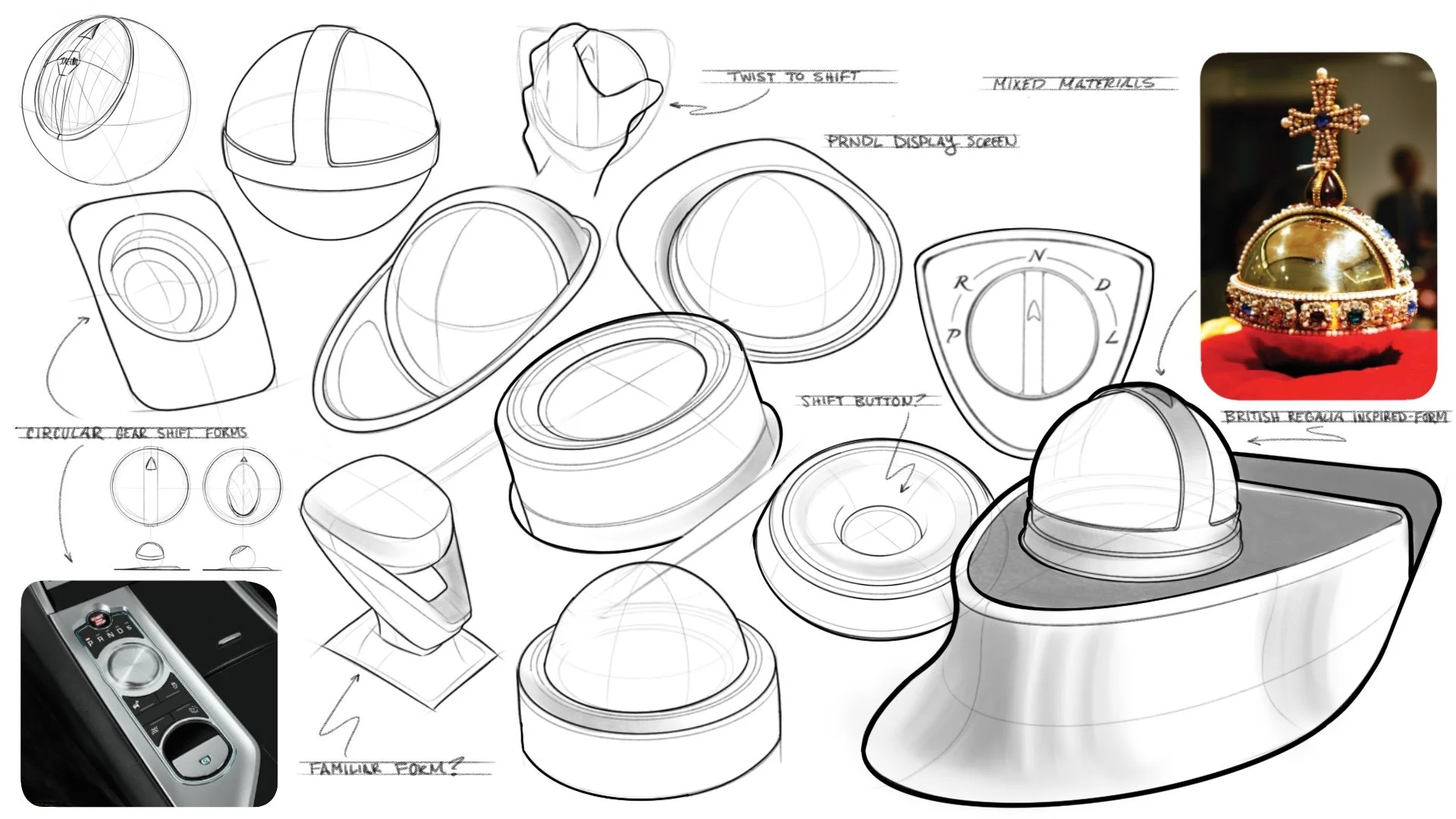
Inspired by the orb of British royal regalia, the dial shifter creates a sense of royalty while maintaining an intuitive PRNDL display screen.
Its continuous, sculpted surfaces mimic the flowing forms found throughout Jaguar’s exterior and interior designs.
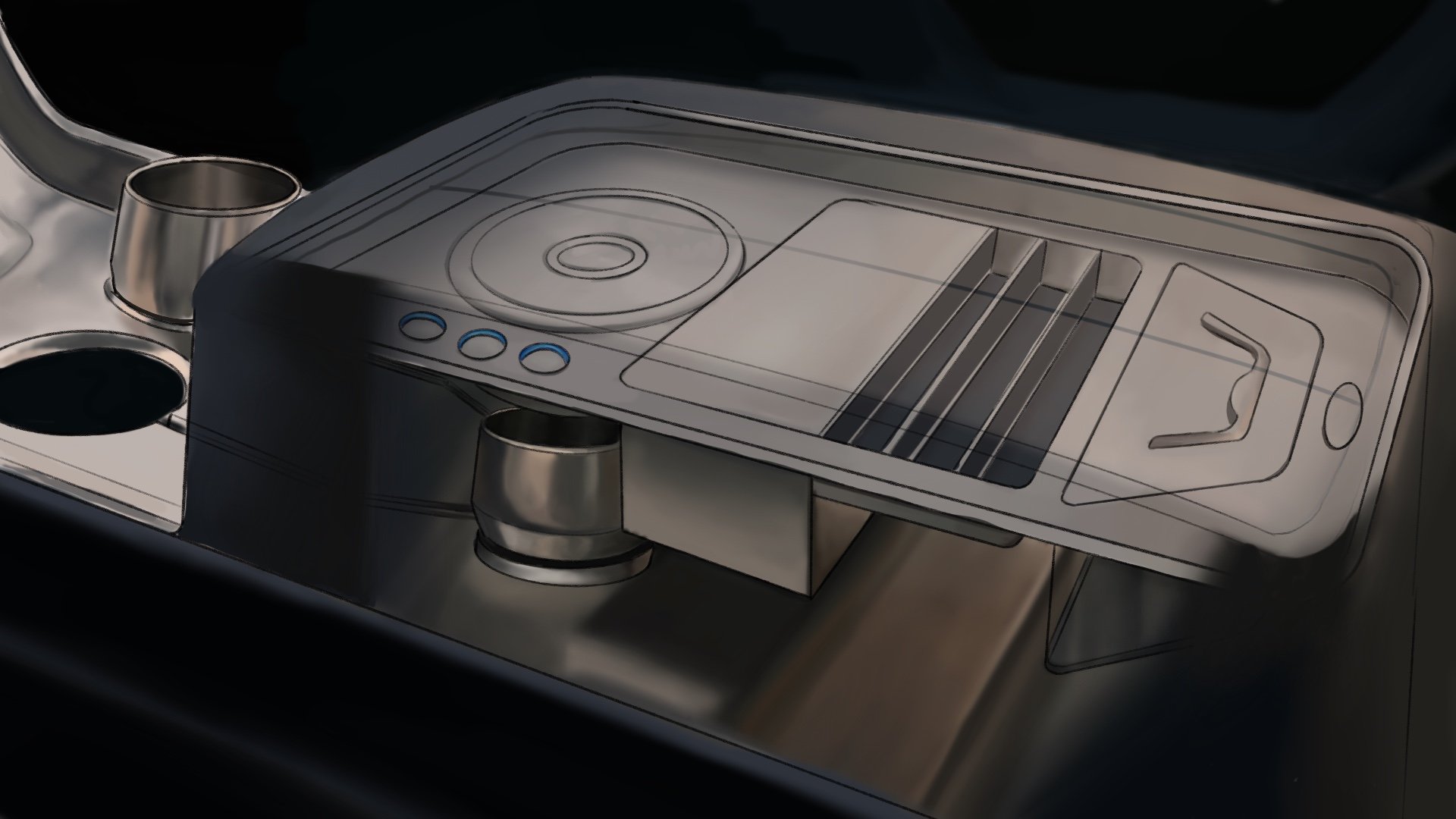
User-centered Experience.
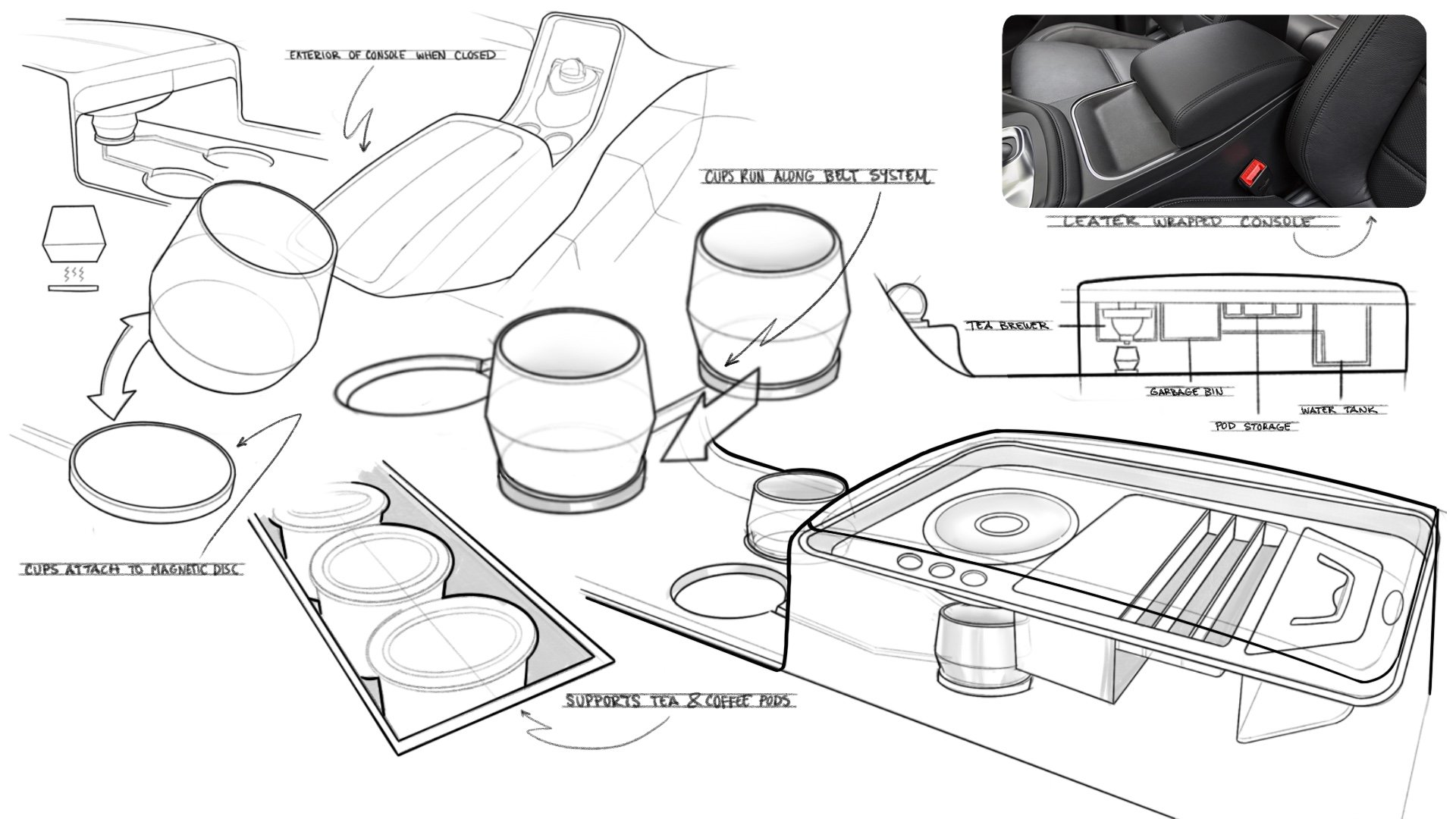
This integrated brewing system includes a water tank, pod storage and disposal, autonomous cleaning, complete brewing system, and a magnetic belt securely holds temperature-preserving mugs to minimize movement and prevent spills.
By designing around a familiar, comforting ritual, the console transforms a functional storage space into an experience centered around relaxation, comfort, and the user.
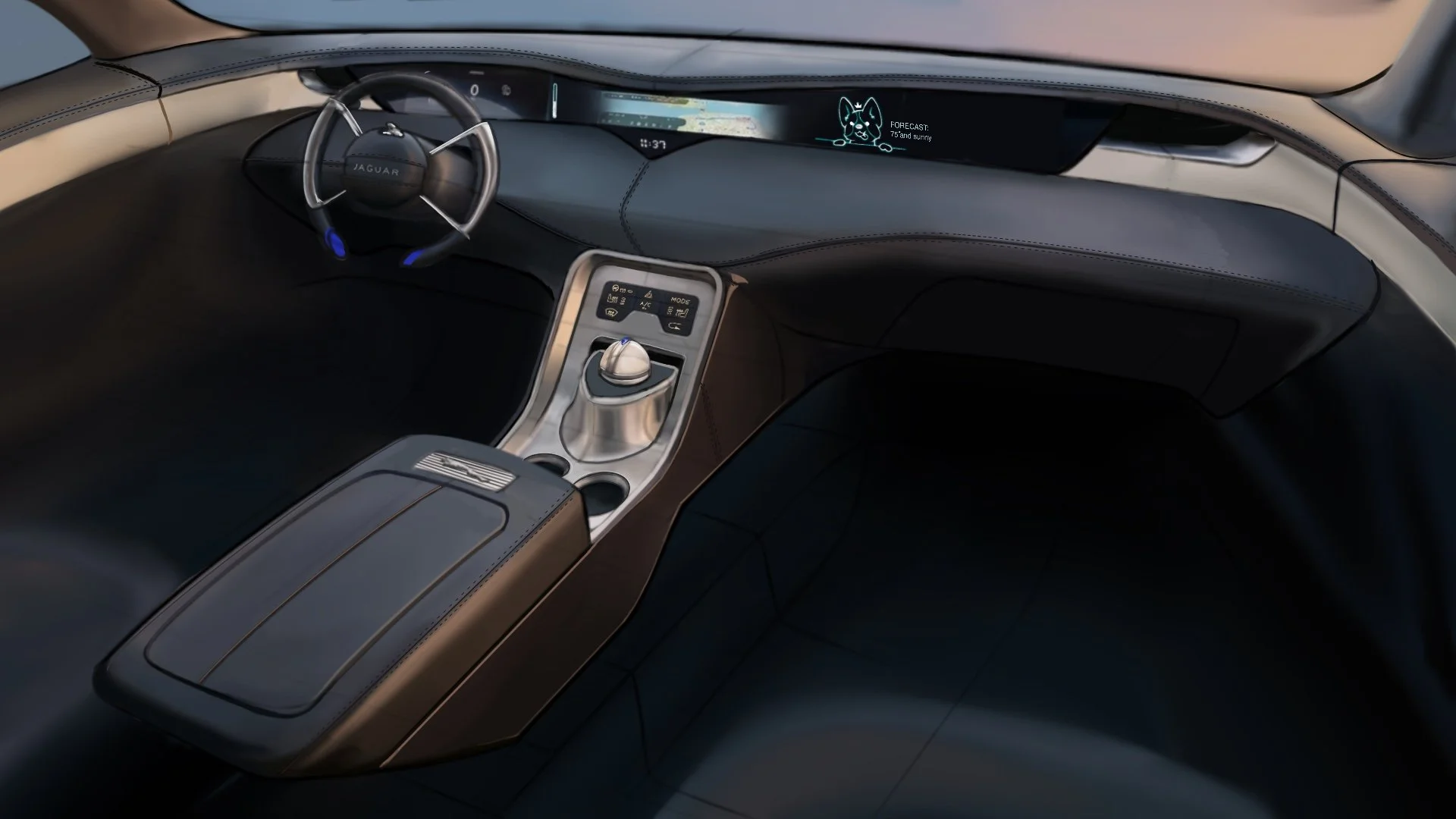
The Concept.
The final interior brings together my three core design goals: user-centered experience, mixed-materiality, and Princess Diana as an expression of the Analog Renaissance.
The cockpit silhouette is inspired by Diana’s iconic “Revenge Dress,” translating its confidence, elegance, and sculptural form into an automotive environment. Mixed materials create a tactile sense of luxury, while the integrated tea experience prioritizes comfort and human connection.